
How Occupational Therapists Assess Home Mobility Needs in Ireland
For many people with limited mobility, something as simple as sitting down or standing up can become a daily struggle. Occupational Therapists (OTs) play a crucial role in helping individuals maintain independence and safety at home—especially when recommending assistive equipment like riser recliner chairs.
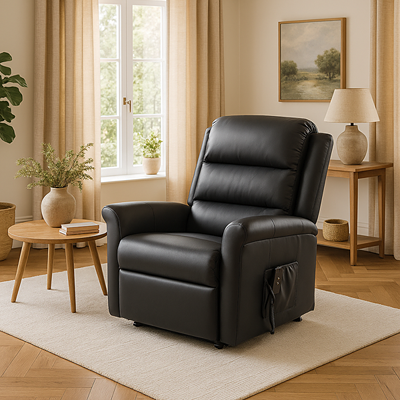
The Assessment Process and what to Expect
An OT’s assessment ensures the chair meets the user’s medical needs, home environment, and long-term mobility goals.
Here’s how the process works in Ireland:
1. Understanding the Individual’s Needs
The OT will discuss:
- Medical history (e.g., arthritis, Parkinson’s, MS, or post-surgery recovery).
- Current mobility challenges (difficulty standing, pain, balance issues).
- Daily routinesto determine how often the chair will be used.
2. Evaluating Seating & Postural Support
A proper chair prevents pain, pressure sores, and poor posture. The OT checks:
- Can the person sit/stand unaided, or do they need assistance?
- Are extra supports needed (e.g., lumbar cushions, tilt functions, or lateral supports)?
- Is there a risk ofskin breakdown (important for wheelchair users or those with limited movement)?
3. Home Environment Check
The chair must fit the space safely. The OT assesses:
- Room layout (space for the chair to recline fully).
- Flooring (rugs, uneven surfaces that could cause trips).
- Doorway widths (for delivery and positioning).
- Nearby supports (e.g., grab rails or tables for stability).
4. Functional Features & Ease of Use
Not all riser recliners are the same. The OT considers:
- Single vs. dual motor (for customised back/leg positioning).
- Control types (simple buttons vs. remote for those with dexterity issues).
- Weight capacity & seat depth (ensuring a comfortable fit).
5. Caregiver & Family Considerations
If a caregiver helps, the OT will:
- Assess transferring ease (reducing strain on both user and helper).
- Recommend features like easy-clean fabrics or sturdy armrests for support.
What is an Occupational Therapist?
Occupational Therapy is a healthcare profession offering support to people with physical, psychological and social problems to enable them to live life to the fullest. Occupational therapists help people to do the everyday activities they want and need to do when faced with illness, injury, disability or challenging life circumstances or events. (© AOTI)
Why Professional Guidance Matters
Choosing the wrong chair can lead to discomfort, falls, or reduced independence. In Ireland, OTs provide tailored advice to ensure:
- Safety– Preventing slips and poor posture.
- Comfort– Reducing pain and pressure sores.
- Long-term mobility – Slowing decline through proper support.
Take the Next Step Toward Independence.
If you or a loved one struggles with mobility, an OT assessment is the best first step.
“After my hip surgery, I dreaded getting out of my old armchair. The OT recommended a riser recliner with lumbar support—now I can sit and stand without help.”
–Mary, Dublin
Request a Free Consultation Today
Early intervention can pevent falls, improve comfort, and maintain independence. Simply fill out the form and an OT will contact you to arrange an appointment to discuss:
- Personalised seating solutions.
- Home safety adjustments.
- Funding options (e.g., HSE schemes or grants).
Don’t wait—small changes can make a big difference!
Book Your Free OT Assessment
Takes 30 seconds, no obligation.